Cart
0

Over time, many homes fill up with items that were bought quickly and kept out of habit. They’re not necessarily bad purchases, but they don’t contribute much anymore. They take up space, require upkeep, or simply don’t feel relevant. A reset begins by letting go of those things, not to create emptiness, but to make room for what genuinely belongs.
1. Start With What You Already Own
Before adding anything new, rearrange. Move furniture, shift rugs, swap decor between rooms. This costs nothing, creates a noticeable change, and helps you rediscover items you may have stopped noticing.
From a sustainability point of view, this is also the most responsible place to begin. Extending the life and relevance of what you already own reduces unnecessary buying and waste.
2. Let Go of What Doesn’t Age Well
Some objects wear out quickly or lose their place in a home. Others improve with time.
One of the biggest shifts comes from paying attention to materials. Some materials hold up over time. Others don’t. Synthetic finishes, trend-led décor, and poorly made objects tend to age badly and need replacing often. Natural materials, wood, clay, metal, leather, hand-finished fabrics, tend to do the opposite. They change slowly, develop character, and continue to feel appropriate even as styles move on.
As you refresh your space, notice which materials have held up and which haven’t. Keeping fewer, better-made pieces usually leads to a calmer home and a smaller environmental footprint.

3. Use Textiles to Change the Mood, Not the Furniture
Soft furnishings are one of the simplest ways to update a space without creating waste. Changing cushion covers, throws, or bed linen can shift the mood of a room instantly.
Instead of buying multiple sets, focus on a small rotation of durable fabrics that work across seasons. Neutral bases with one or two accent textures tend to stay relevant longer and reduce the need for frequent replacements.
4. Reset the Entryway With Function in Mind
The entryway often becomes a dumping ground. Clearing it out is one of the quickest ways to make a home feel more organized.
Keep only what you use daily. Add a plant if there’s enough light. Choose storage that’s practical rather than decorative. When a space works well, it doesn’t need constant updating.

5. Edit Your Shelves
Rather than adding new décor, remove what doesn’t belong. Shelves don’t need to be full to feel finished.
Mix books with a few meaningful objects and leave breathing room. This not only looks better but also makes cleaning easier and reduces the impulse to keep buying small, unnecessary items.

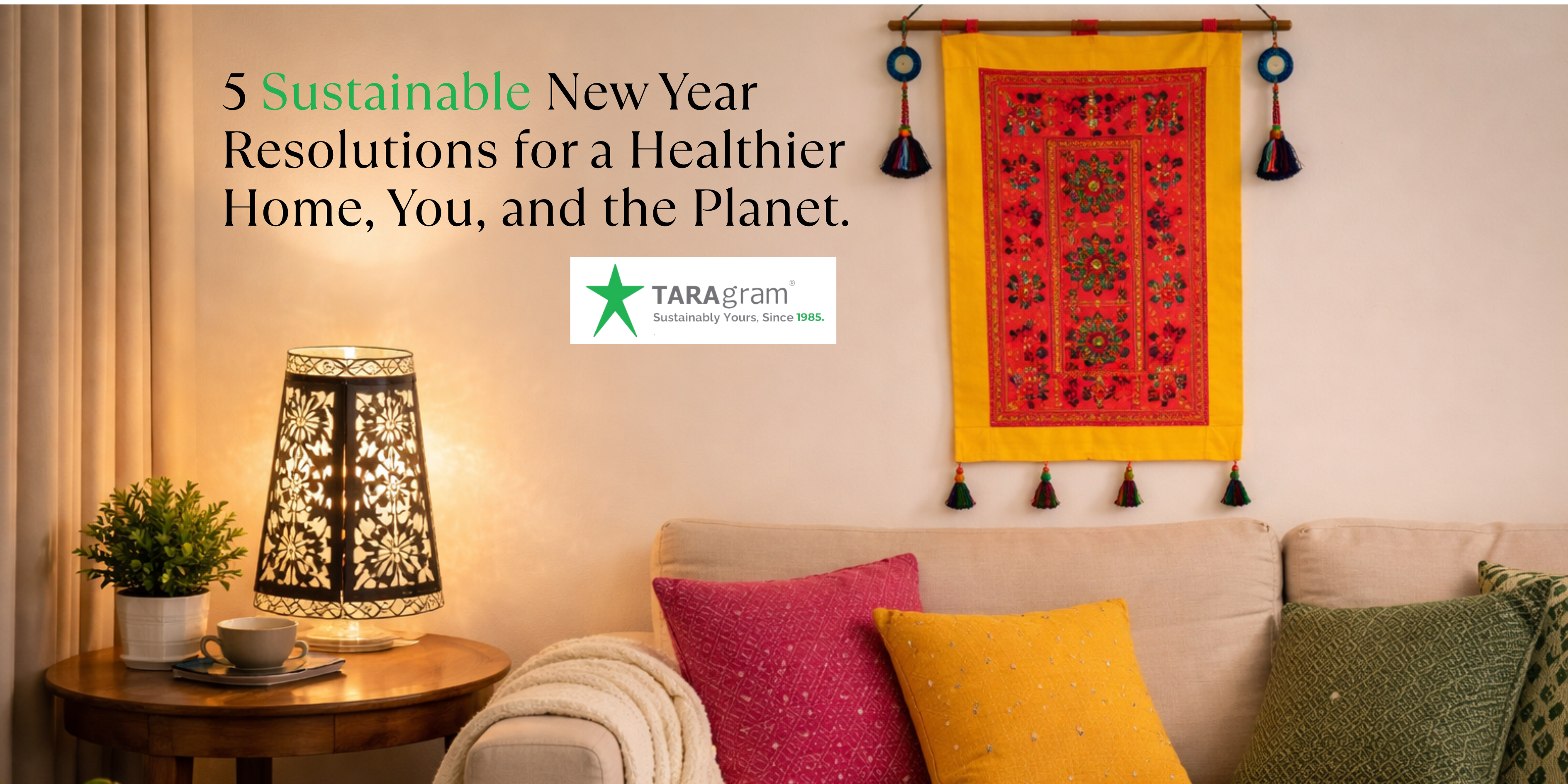
Shop products shown at TARAgram.in
6. Use Mirrors and Light More Intentionally
Good light changes how a home feels and how often spaces are used.
Place mirrors where they reflect natural light rather than clutter. Use lamps to create softer lighting instead of relying on harsh overhead fixtures. Thoughtful lighting reduces the need for excess décor and makes rooms more comfortable in the long run.
7. Choose Plants That Fit Your Routine
Plants bring life into a home, but sustainability also means being realistic.
Choose plants that suit your space, schedule and lifestyle. A few healthy plants are far better than many that need constant replacement. Could be anything from air purifying plants to kitchen herbs. When plants thrive, they become part of the home rather than short-lived additions.

8. Focus on Comfort Over Trends
Trends change quickly. Comfort doesn’t.
As you refresh your home, prioritize pieces and layouts that feel good to use daily. A chair that supports your back. Table runner and coasters on the dining table that don't wear or tear after a few uses, lighting that’s easy on the eyes. Materials that don’t need frequent care or replacement.
Homes designed this way tend to last longer, both visually and functionally.

A More Thoughtful Way to Reset
Refreshing your home for the new year doesn’t have to mean consuming more. It can mean choosing carefully, keeping what works, and replacing only what truly needs replacing.
A home that asks less of you, less maintenance, less clutter, less constant updating, is often a more sustainable one.
And in the long run, it’s also a more comfortable place to live.
Note: Taragram E-Commerce is a sustainable marketplace (taragram.in). Sustainability is at the heart of what we do, and 5% of the revenue from every sale is dedicated to supporting sustainable initiatives. Thank you for choosing to be a part of our community.
Sustainably yours, since 1985.